
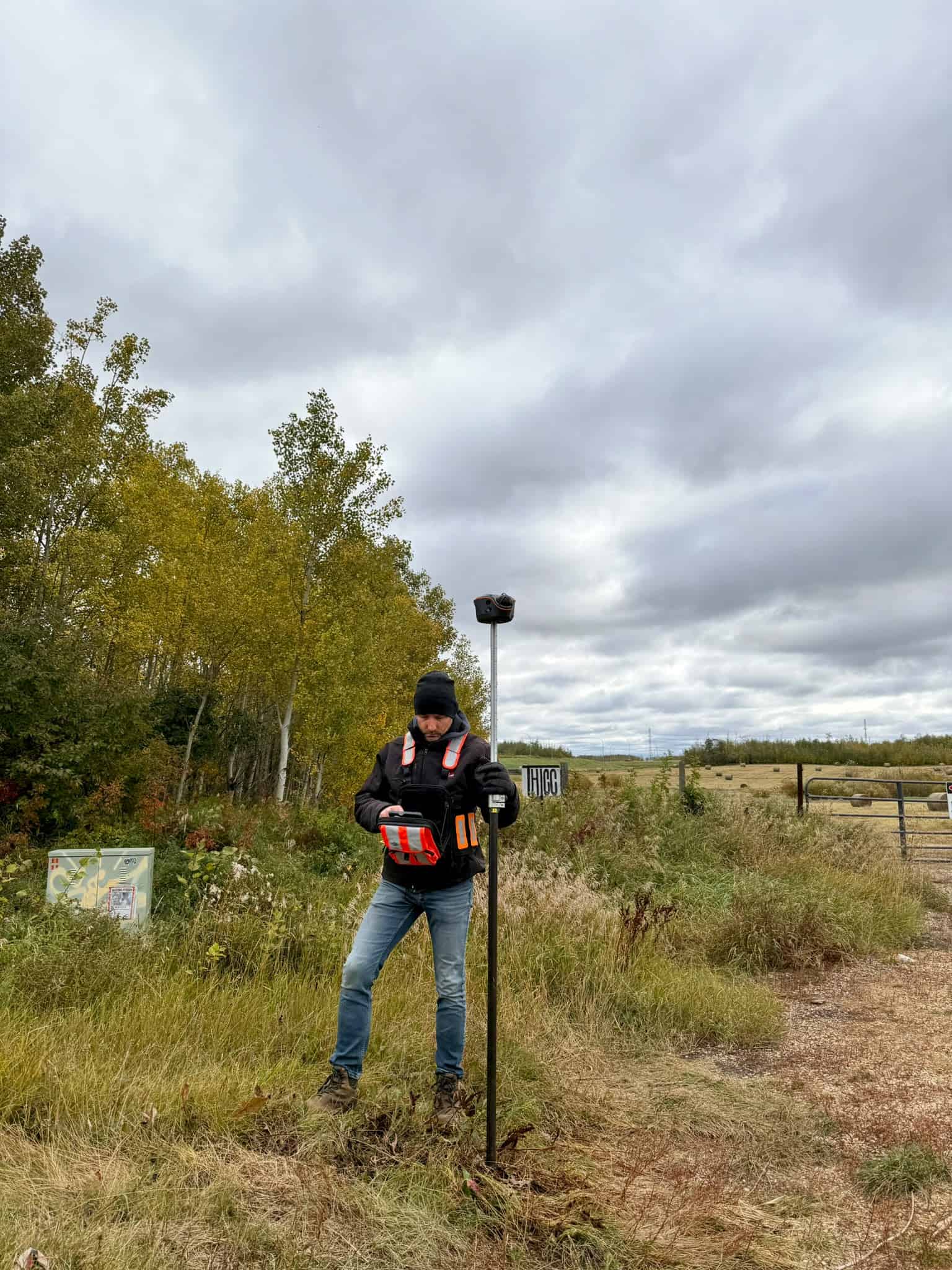
I started surveying when I was five years old. Not officially — I was just the kid tagging along with my dad and his crew, too small to carry anything useful, but happy to be there. I never really left.
Back then a crew meant four or five of us packed into a cab before sunrise, thermoses rattling, somebody’s cassette playing too loud. By the time we reached the site we’d solved half the world’s problems and argued about the other half.
There was the party chief, who’d seen it all and let you know it. The instrument man, fussy about his tripod like it was a family heirloom. The chainmen and rodmen cutting line through willow and spruce, hollering distances across a quarter section. You learned the job from those people. More than that, you learned about life from them.
You knew whose wife was expecting, who was saving for a boat, whose dad was sick. You ate lunch on tailgates, laughed until your face hurt, and covered for each other when things went sideways. Some of those men are still the first people I’d call if I needed help. Spend ten hours a day walking lines together and you don’t just become coworkers. You become a crew.
The work was a team sport. Someone on the gun, someone on the rod, someone chaining, someone on notes. Every measurement passed through several sets of hands. When we tied into a monument after a long traverse and the closure came out tight, we celebrated together.
Today I can pull up to a site alone, set up a GNSS base or a robotic total station, grab the rover, and do in a morning what once took five of us two days. The technology is remarkable, and I wouldn’t trade the accuracy. Clients get better results, faster, for less. That’s progress.
But some days it’s a lonely game.
There’s no one to hand the rod to. No one to laugh with when you step through thin ice into a slough. No one to share the sunrise with when the fields are glowing pink. You talk to the robot sometimes. It doesn’t talk back. The quiet gets loud.
I worry about the young surveyors coming up. Where do they learn the judgment, the instincts, the stories? I learned standing beside my dad and the men who worked with him. A one-person crew is efficient, but it doesn’t mentor anybody.
So here’s my ask. Be deliberate about the human side. Send the new hire out with a veteran now and then, even when the job only “needs” one. Call the guy working the next township over. Grab coffee with the folks you used to run line with. Show up at the association meetings. Tell the stories.
The instruments have never been better. Let’s make sure the people running them never feel like they’re out there on their own.
To everyone I ever shared a cab with — starting with my dad — thank you. I still remember the jokes.
Recent Posts
The Financial Blueprint: How to Budget for Site Surveying Services
Everything in construction costs money, and trying to plan out those expenses can feel like trying to guess the price of a massive, real-life LEGO set. When you are building something big, like a new...
Why GPS Needs a "Snapchat Timer": Understanding Correction Age
Ever Wondered How Your Phone Actually Knows Exactly Where You Are? Imagine you are playing a mobile game like Pokémon GO, or using Google Maps to find a new skatepark. Your phone uses GNSS to figure...